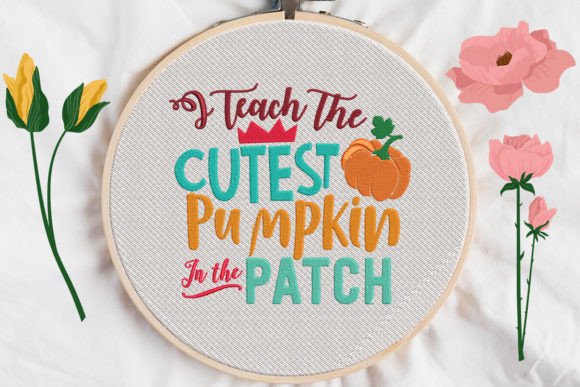
I Teach the Cutest Pumpkin in the Patch
As an embroidery designer who spends weekends navigating crowded craft fair aisles and managing busy Etsy shops, I know that a successful machine embroidery design does more than just look pretty on a hoop. It needs to stop a browser in their tracks, translate beautifully into a physical product, and justify a price point for the handmade product it adorns. When I first reviewed the digital file titled "I Teach the Cutest Pumpkin in the Patch," my immediate instinct was to evaluate its potential as a standout piece for the autumn market season. This isn't just another generic fall motif; it carries a specific personality that speaks directly to educators, parents, and anyone who appreciates a touch of whimsy in their seasonal decor.
First Impressions: Whimsy Meets Classroom Charm
The title alone sets a playful tone. "I Teach the Cutest Pumpkin in the Patch" suggests a narrative. It is not merely decorative; it is conversational. For a crafter or embroidery business owner, this is gold. It provides an instant hook for customers browsing a booth. The design likely balances boldness with approachability, fitting perfectly into the modern farmhouse aesthetic that remains dominant in home decor while adding a personal, teacher-centric twist. It feels festive yet soft, avoiding the overly rustic or cluttered looks that can sometimes overwhelm a small stitch area. Instead, it aims for a premium, clean finish that elevates the perceived value of the item it embellishes.
When you hold the concept in your mind, you imagine a pumpkin character—perhaps wearing glasses, holding a book, or sporting a cheerful expression—that captures the spirit of the school year beginning. This emotional connection is what drives sales at weekend markets. Customers don't just buy fabric; they buy identity. A teacher buying a tote bag with this design is buying a statement about their pride in their profession and their love for the season.
Product Applications and Visual Appeal
So, where does this embroidery file shine brightest? In my experience preparing table displays, certain products naturally draw the eye, and this design pairs exceptionally well with them. Let’s break down how "I Teach the Cutest Pumpkin in the Patch" performs across various craft fair products.
- Tote Bags: This is perhaps the strongest application. A canvas tote bag offers a large, flat surface that allows the design to breathe. As a tote bag design, it works beautifully as a chest-level focal point. The contrast between the sturdy canvas and the smooth embroidery threads creates a tactile appeal that customers love to touch. It signals durability and everyday utility, making it a practical gift for teachers heading back to school.
- Aprons: An apron embroidery project is a classic bestseller. Placing this pumpkin design on the bib or the lower pocket of a kitchen apron adds a splash of color to a functional item. It appeals to both teachers who cook and parents who want a fun kitchen accessory. The design’s whimsical nature ensures it doesn't feel too childish, maintaining an adult-friendly aesthetic suitable for a boutique maker's inventory.
- Tea Towels: For a smaller, more affordable entry point, tea towel embroidery is ideal. These items are impulse buys. If the design scales well, it can be stitched near the hem or centered on a white or neutral linen towel. The key here is legibility; the text must remain crisp even when viewed from a distance across a crowded booth table.
- Embroidered Patches and Caps: Translating this design into an embroidered patch allows for versatility. You can sell patches separately for students to put on backpacks, or apply them directly to baseball caps. However, curved cap surfaces require careful attention to tension and stabilizer choice to prevent puckering, which can ruin the clarity of the pumpkin’s features.
- Fabric Pouches and Pillow Covers: Small pouches serve as excellent holders for pencils, makeup, or snacks. A pillow cover adds a larger decorative element for the home. Both benefit from the design’s ability to act as a standalone accent without needing additional graphics.
Production Practicality and Batch Efficiency
For any Etsy seller or small shop product creator, production time is money. A design that takes twenty minutes to stitch every time it runs will eat into your profit margins. While exact stitch counts vary by file version, designs with clear, distinct shapes like pumpkins often utilize efficient fill stitches. The text elements need to be evaluated for run-time; dense lettering can slow down the machine significantly.
Furthermore, consider the stitch density. If the pumpkin has tiny, intricate details that require very fine stitching, you risk losing definition when embroidered on textured fabrics like heavy canvas or waffle-weave towels. For batch production, simplicity is key. The design should be robust enough to handle slight variations in fabric tension or hoop placement. If the design relies on extremely thin lines, it may lose clarity at smaller sizes, which is a common pitfall when creating digital sellers assets for multiple product types.
Critical Considerations for Quality Control
Before committing to a full run of commercial embroidery items, there are several technical checks every designer must perform. First, always test the design on scrap fabric that matches the texture and weight of your final product. A design that looks perfect on smooth cotton might shift or distort on a thick terry cloth towel. Check the thread colors carefully; bright orange thread against a dark navy background requires high contrast to pop, whereas a pastel pumpkin on cream fabric offers a softer, more elegant look.
Pay close attention to the hoop size constraints. If the design is large, it may require a jump stitch sequence that increases trimming time. Also, inspect the spacing around the text. "I Teach the Cutest Pumpkin in the Patch" is a long phrase; ensure the font size is large enough to be read easily. Tiny lettering is a major deterrent for buyers who cannot decipher the message from three feet away.
Another vital step is confirming commercial licensing. Just because you purchase a digital embroidery file does not automatically grant you the right to sell finished goods. Always review the license terms to ensure you are compliant, protecting your brand reputation and legal standing.
Photography and Market Presentation
In the age of online shopping, your printable mockup is just as important as the physical sample. This design photographs exceptionally well because of its subject matter. Pumpkins are inherently photogenic, and the addition of the teaching theme adds a layer of relatability. Use natural lighting to highlight the texture of the stitches. Show the design on different backgrounds—on a wooden desk next to a coffee mug, or hanging on a classroom door—to help customers visualize the product in their own lives.
Ultimately, "I Teach the Cutest Pumpkin in the Patch" is more than just a needle-and-thread pattern; it is a strategic asset for any creative entrepreneur looking to capitalize on the back-to-school and fall seasons. By understanding its strengths, respecting its technical requirements, and presenting it thoughtfully, you can turn this design into a high-demand item that resonates with buyers and builds loyalty for your handmade brand.